What is a good ROAS for a small business?
There is no universal good ROAS. Your margin sets the break-even, and a good target sits above it. Here is the math, a worked example and the traps to avoid.
On this page
ROAS, or return on ad spend, is the revenue your ads bring in divided by what you spent on them. A good ROAS is any number above your break-even point, and your profit margin decides where that point sits. If you keep 60 cents of every sales dollar after the cost of what you sold, you break even at a ROAS of about 1.67, and everything above that line is profit before your other costs.
That is why a number that is great for one business can sink another. Here is how to find your own line, set a target above it, and avoid the readings that make a losing campaign look like a winner.
What ROAS measures
ROAS compares two numbers: the sales an ad brought in and the money you spent to run it.
ROAS = revenue from ads ÷ ad spend
If you spend $200 on ads and they bring in $700 in sales, your ROAS is 3.5. You will see the same result written three ways: 3.5, 3.5:1 or 350%. Google Ads uses the percentage form for its Target ROAS bid strategy, where $5 in sales for every $1 of ad spend is a target of 500%, as Google Ads Help explains in its Target ROAS guide.
ROAS is a revenue number, not a profit number. A ROAS of 3 means $3 came back for every $1 spent, but part of those $3 paid for the flour, the parts or the technician’s time. That gap is what the next step closes.
Find your break-even ROAS
Your break-even ROAS is the point where ads pay for themselves and nothing more. It depends on your gross margin: the share of each sale left after the direct cost of what you sold.
Break-even ROAS = 1 ÷ gross margin
| Gross margin | Break-even ROAS |
|---|---|
| 80% | 1.25 |
| 65% | 1.54 |
| 50% | 2.00 |
| 40% | 2.50 |
| 25% | 4.00 |
A skin studio selling high-margin services can profit at a ROAS of 1.5. A shop reselling products at a 25% margin loses money at anything under 4. So find your margin before you judge any campaign.
To estimate it, take a typical month, subtract the direct costs of what you sold (ingredients, materials, parts, the hourly cost of the person doing the job) from revenue, and divide what is left by revenue. Your bookkeeper can give you this number in a few minutes, and it is worth rechecking when your prices or costs change.
Set a target above break-even
Break-even means the ads paid for themselves, not that they paid you. Rent, the front desk and your own time still need covering. So set a target that leaves the share of revenue you want to keep.
Target ROAS = 1 ÷ (gross margin minus the share of revenue you want left over)
Say your gross margin is 65% and you want ads to leave you 25 cents of every sales dollar. Your target is 1 ÷ (0.65 minus 0.25), which is 2.5. Between 1.54 and 2.5, the ads still make money, just less than you wanted. Below 1.54, they cost you money.
Write both numbers down. Break-even tells you when to stop an ad. The target tells you when to give it more.
A worked example: a neighborhood bakery
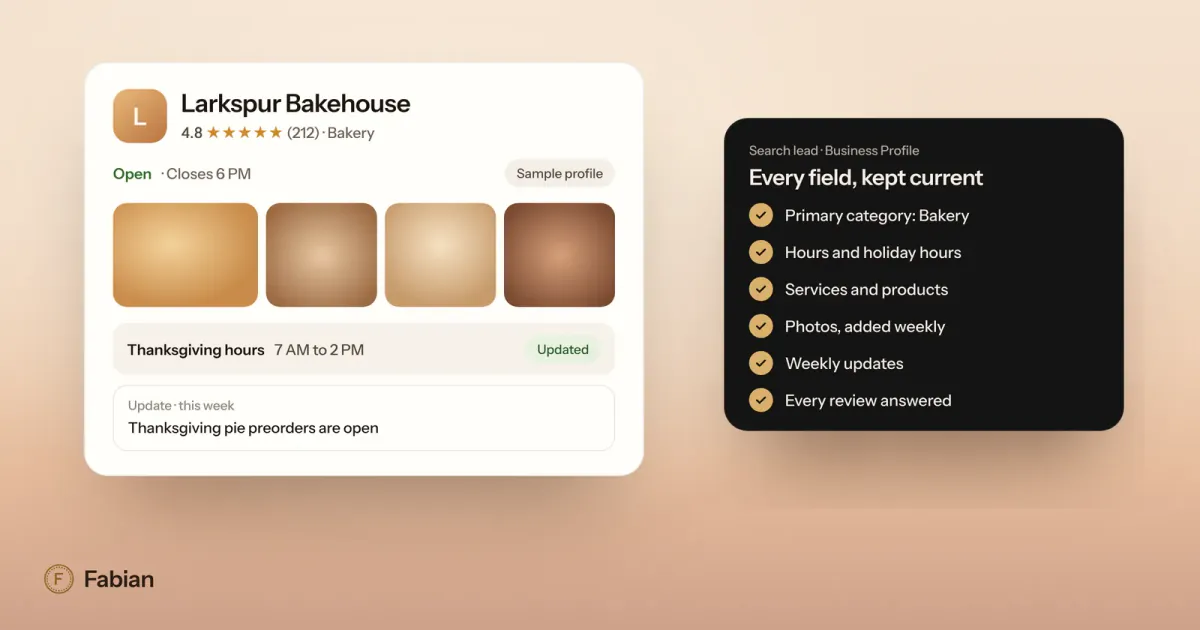
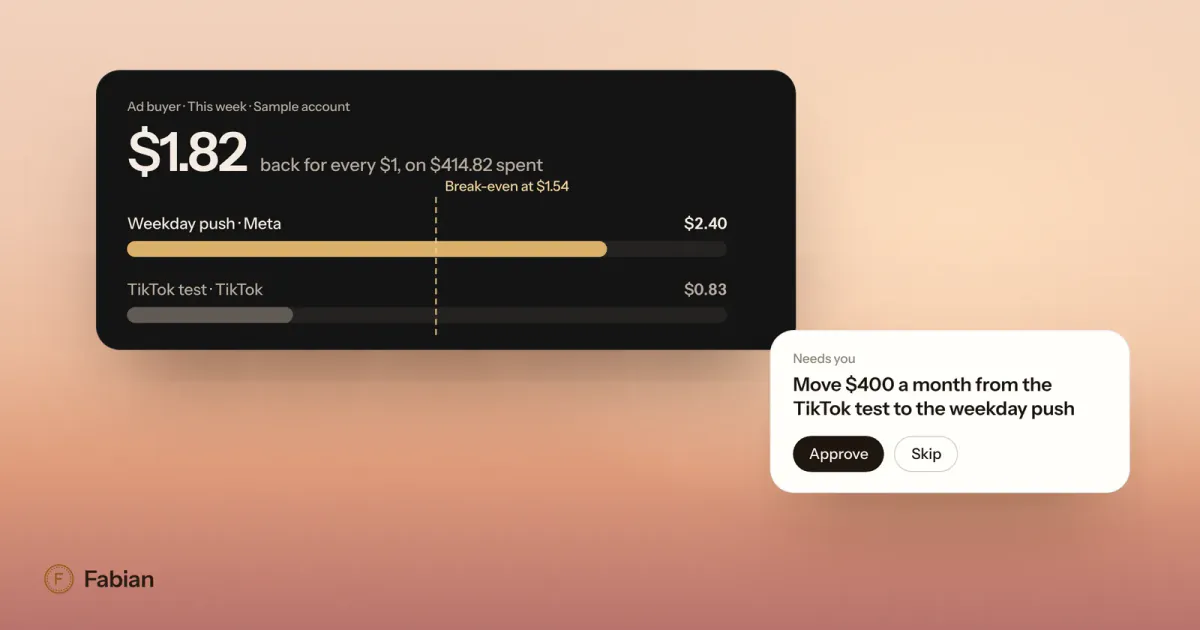
Here is how it plays out for Larkspur Bakehouse, a sample bakery we use as an example. Last week the owner, Dana, spent $414.82 on ads, and they brought back $1.82 for every $1, about $755 in sales. Her two campaigns tell different stories:
- The weekday push on Meta returned $2.40 for every $1.
- The TikTok test returned $0.83 for every $1.
Say the bakery’s gross margin is 65%, so its break-even is 1.54. The weekday push clears that line with room to spare. The TikTok test loses money before rent is even counted: each $1 spent brings back 83 cents of sales, and only about 54 cents of that is margin.
The blended 1.82 looks fine, and that is the trap. A healthy average can hide a campaign that drains money. The fix is to move budget from the TikTok test to the weekday push a step at a time, then watch whether the push holds its return as it spends more. A campaign that does well on a small budget does not always do as well on a larger one, so each step is a test, not a promise.
When ROAS misleads you
ROAS is only as good as the sales it counts. Watch for these five readings:
- Two platforms claim the same sale. Meta and Google each count conversions with their own attribution settings, so a customer who saw an Instagram ad and later clicked a search ad can show up in both reports. Add the platform numbers together and you can end up with more sales than your register recorded.
- Regulars who would have come anyway. If most of the sales credited to ads come from returning customers, the ad looks better than it is. Check how many of those buyers are new.
- Sales that happen offline. A plumber’s ad that leads to a phone call and a $450 job shows a ROAS of zero unless the call is counted and given a value.
- Small numbers. Three sales in a week is not a trend. Judge a campaign on a few weeks of results, or on enough sales that one large order cannot swing the number.
- Customers worth more than one visit. A new patient at a dental practice may come back for years, so ROAS on the first visit understates the ad. Decide in advance how much future value you will count, and keep that rule the same from month to month.
Measuring ROAS when customers call or walk in
Most local businesses do not sell through a checkout page, so each lead needs a value.
Value per lead = average sale × the share of leads that become customers
Take Tallis Plumbing, another sample business. If the average job is $450 and one call in three becomes a job, each call is worth $150 in sales. Ten calls from $500 of ads is $1,500 in sales, a ROAS of 3.
To count those leads:
- Track calls as conversions. Google Ads can count calls from your ads and from your website, and only count calls that last longer than a length you choose. Its guide to measuring calls from ads covers the setup.
- Give each campaign its own code or link. A separate offer code or booking link per campaign tells you where each booking came from.
- Ask new customers how they found you, and record the answer at the counter or in your booking tool.
- Check blended ROAS every month: total sales divided by total ad spend. Some marketers call this MER, for marketing efficiency ratio. It cannot tell you which ad worked, but it cannot be double counted either.
Calls from your Google listing are leads too, and they cost nothing per click. Keeping a complete Google Business Profile means your ads and your map listing work toward the same goal.
How often to check, and what to change
Check ROAS weekly and make changes on a steadier rhythm. Daily numbers swing too much on a small budget, especially in the first weeks of a campaign, while the platform works out who responds to it.
Each week, sort your campaigns into three groups:
- Above target: give it more budget, in steps.
- Between break-even and target: change the offer, the audience or the creative, then look again.
- Below break-even after a fair test: pause it or rework it, and move the money to what pays.
If you report these numbers to a partner or a client, the one-page report structure for agencies keeps ROAS readable, with each number tied to its source.
This is the routine Fabian’s Ad buyer runs every morning: it reads what each ad brought back, then asks before moving a dollar to the ads that pay, and your monthly cap stays put. If you would rather approve the move than do the math yourself, meet the marketing team that runs it daily.
Frequently asked questions
Is a ROAS of 2 good?
It depends on your margin. At a 50% gross margin, a ROAS of 2 only breaks even, because half of every sales dollar goes to the cost of what you sold. At an 80% margin, a ROAS of 2 is solidly profitable, since break-even is 1.25. Work out 1 divided by your gross margin first, then compare your ROAS with that number.
What is the difference between ROAS and ROI?
ROAS divides the revenue from ads by the ad spend, so it ignores what the product or service cost you. ROI looks at profit: what you kept after costs, divided by what you invested. A campaign can show a ROAS of 3 and still lose money when margins are thin. Use ROAS to compare ads with each other, and ROI to judge whether advertising pays.
How do I calculate break-even ROAS?
Divide 1 by your gross margin, written as a decimal. With a 65% margin, 1 divided by 0.65 is about 1.54, so each $1 of ads needs to bring back $1.54 in sales just to cover itself. To find your gross margin, subtract the direct cost of what you sold from your revenue, then divide the result by your revenue.
Why is my ROAS different in Meta and Google?
Each platform counts the sales it can connect to its own ads, using its own attribution settings, and one customer often sees ads on both before buying. That means both platforms can claim the same sale. Compare each platform with itself over time, and check the combined total against your actual sales every month so the overlap does not fool you.
What ROAS should a new campaign have?
Give a new campaign a few weeks and enough sales to judge before you hold it to your target, because early results swing while the platform learns who responds. Use your break-even ROAS as the floor. If the campaign stays below it after a fair test, change the offer or the audience, or move the budget to a campaign that already pays.